
You turn the key before the morning school run, but the engine cranks longer than usual. On the second attempt, it finally starts. Now you wonder whether it will restart after drop-off or leave you scrambling for a ride to work. Yesterday’s errands gave you no reason to worry, and the car started easily all summer. For drivers considering engine repair in Moorhead, this change raises a practical question: what needs checking before the next commute? A cool night can expose an existing weakness, but the starting pattern helps distinguish a battery or starter problem from a fuel-delivery or engine-control issue.
Start with one useful distinction: does the engine turn slowly, or does it turn normally without catching?
Why Do Starting Problems Appear After a Cool Night?
Lower temperatures slow the chemical reactions that help a battery deliver starting power. Cooler engine oil also creates more resistance during cranking. An aging battery or poor electrical connection may struggle with that additional demand.
AAA explains how cold weather affects battery performance. However, an ordinary fall cooldown should not routinely prevent a healthy vehicle from starting.
For drivers balancing school drop-offs, work, and errands along Main Avenue, uncertainty can disrupt the entire day. You might skip a stop because you worry about restarting afterward.
Weather provides context. The cranking sound and timing offer more useful diagnostic clues.
What Does Your Engine’s Starting Pattern Tell You?
This guide focuses on gasoline-powered vehicles; diesel starting problems may require different checks. Use these comparisons to describe the symptom without assuming which part needs replacement.
| What You Notice | Possible Area of Concern | Useful Diagnostic Checks |
| Slow, labored cranking | Battery, connections, or starter | Battery condition, cable voltage drop, and starter operation |
| Normal cranking but delayed starting | Fuel delivery, ignition, or sensor information | Fuel pressure, ignition operation, and relevant sensor readings |
| Easier starting on the second attempt | Conditions that change between attempts | Reproduce the symptom and test the systems indicated by the findings |
1. Why Does the Engine Turn Slowly?
A dragging cranking sound directs attention toward the starting system. A weak battery, corroded connection, poor engine ground, or faulty starter can contribute.
Working headlights do not rule out a battery problem. The starter requires substantially more current than the lights, so the battery may power accessories while struggling to turn the engine.
2. Why Does the Engine Crank Normally but Take Longer to Catch?
When the engine turns at its usual speed, a technician may investigate fuel delivery, ignition, and the sensor information that helps the engine computer manage starting.
The engine coolant temperature sensor supplies temperature data to the engine control module. During a cold start, the module uses that information, alongside other inputs, to adjust fuel delivery.
An inaccurate reading can contribute to an air-fuel mixture that makes starting difficult. A technician can compare temperature readings with ambient conditions after the vehicle sits and investigate readings that do not match.
3. Why Does the Engine Start More Easily on the Second Attempt?
A second attempt may succeed because conditions change between attempts. On some vehicles, insufficient fuel pressure during the first attempt can contribute to delayed starting. Easier starting afterward does not prove that fuel pressure caused the problem.
A technician can measure pressure during starting and check pressure retention against the manufacturer’s specifications. If testing confirms abnormal pressure loss, further checks help locate the cause. The starting pattern alone does not justify replacing the fuel pump.
How Can You Document a Problem That Disappears During Your Commute?
An intermittent problem can become difficult to observe once the engine warms. Help the shop understand what happens before you leave home:
- Record the first start. While safely parked, capture the cranking sound and dashboard lights.
- Note the conditions. Include the approximate temperature and whether you parked outside or in a garage.
- Track the resting time. Explain whether the problem follows an overnight stop or shorter breaks.
- Compare later starts. Mention whether the engine starts normally after work or errands.
- Share recent maintenance. Include battery replacement, spark plug service, and previous starting complaints.
Avoid clearing diagnostic codes or disconnecting the battery before your appointment unless safety requires it. Those actions can erase useful information.
How Should Engine Repair in Moorhead Begin?
Some starting complaints require battery, cable, or starter service rather than internal engine repairs. Testing helps identify the affected system.
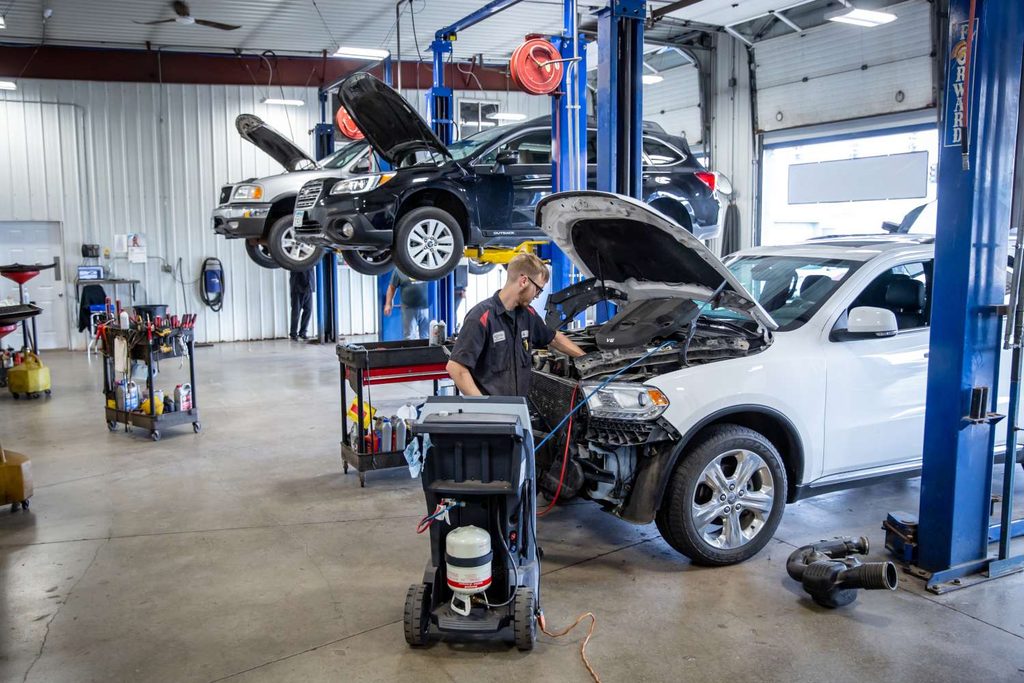
At Duggan’s Auto Service Center, our automotive services include diagnostics and charging and starting-system service. When testing identifies an engine-related fault, we explain the findings and recommend the appropriate engine repair.
Our NAPA Gold Certified center has ASE-certified technicians, and we operate as a AAA Approved Auto Care Repair shop. Meet our team and learn about our qualifications.
A useful diagnostic process follows five stages:
- Observe the problem. Discuss whether an overnight drop-off would help the technician evaluate the first start.
- Check starting power. Evaluate battery condition, electrical connections, and cranking performance.
- Review engine data. Examine relevant trouble codes and sensor readings.
- Test the suspected system. Findings may justify fuel-pressure, ignition, or mechanical checks.
- Verify the result. Whenever practical, repeat the original starting conditions after completing the repair.
If you search for a “mechanic near me,” ask whether the shop can inspect the vehicle before anyone warms up the engine.
How Can You Understand the Recommended Repair?
Ask which test result supports the recommendation and how it relates to your starting problem. A diagnostic code identifies a condition that needs investigation; it does not automatically identify a failed part. Relevant measurements help connect the symptom to the cause.
When Should You Stop Trying to Start the Engine?
Repeated cranking can drain the battery and overheat the starter. Follow your owner’s manual for starting limits and pauses between attempts.
Stop and arrange assistance if you notice smoke, a strong raw-fuel odor, or grinding during cranking. If the engine starts but shakes strongly with a flashing check-engine light, avoid continuing your trip.
Repeated stalling also deserves prompt attention. An engine that eventually starts may still have a fault that affects reliable driving.
Why Does My Car Start Easily After Work but Struggle Overnight?
An overnight rest lets the engine cool substantially. Cooler temperatures can expose some faults, while abnormal fuel-pressure loss during that parking period may independently contribute to delayed starting.
How Does Parking in a Garage Affect Diagnosis?
A garage may keep the vehicle warmer than outdoor parking. Tell the shop where the problem usually occurs so the technician can consider similar conditions during testing.
Why Can Starting Trouble Happen Without a Check-Engine Light?
Some faults do not meet the conditions that trigger the light. Battery, cable, and starter problems can also occur without illuminating it.
How Can Short Trips Contribute to a Weak Battery?
Frequent short trips may not fully replenish the charge that starting consumes. A technician can evaluate battery condition, charging-system performance, and your driving pattern.
What Does a Successful Jump-Start Tell Me?
Additional starting power helped, but that does not identify the underlying cause. Battery deterioration, poor connections, or charging problems may still require investigation.
How Can You Avoid Another Uncertain Morning?
If you suspect you need engine repair in Moorhead, start with testing that identifies why your vehicle struggles after sitting overnight. Address recurring hard starts before they interrupt another school run or workday.
Call Duggan’s Auto Service Center at (218) 233-9169 today to schedule a diagnostic appointment. Explain the overnight starting problem and ask whether a cold-start evaluation would help. Arrange the visit now, while you can plan around it.