
Your battery passed the test. Your dashboard lights come on. Even your radio works perfectly. But when you turn the key, your engine responds with one frustrating click.
Now you’re sitting in your driveway on a cold Moorhead morning, wondering how you’ll get to work.
Maybe you need to cross the Red River into Fargo. Perhaps you’re dropping someone off near Minnesota State University Moorhead. Either way, your plans suddenly depend on a car that refuses to cooperate.
Here’s what makes the situation confusing: a healthy battery doesn’t guarantee that your engine will start.
A worn starter motor, corroded electrical connection, or faulty starting circuit could prevent your engine from turning over.
Before buying another battery or replacing expensive components, an auto mechanic in Moorhead can help identify the actual problem.
And the first clue might be the sound your car makes when you try to start it.
Your Battery Passed the Test. So What’s Stopping Your Engine?
Think of your battery and starter as two parts of the same team.
Your battery supplies electrical energy. Your starter motor uses that energy to turn the engine until it can run independently.
When you turn the key or press the start button, the vehicle’s starting controls activate the starter circuit. The starter motor then cranks the engine.
If everything works correctly, the engine starts.
However, several things can interrupt this process.
Your battery might have sufficient charge, but a corroded cable could restrict electrical current. A faulty starter solenoid might fail to engage the starter properly. The starter motor itself could also develop internal wear.
Even battery testing requires some context.
A fully charged conventional 12-volt lead-acid battery typically measures around 12.6 volts at rest. However, that voltage reading alone doesn’t establish whether the battery can deliver enough current to crank the engine.
A proper battery performance test provides more useful information.
One Click, Rapid Clicking, or Silence? Your Car Is Giving You Clues
When your car refuses to start, pay attention to what happens immediately after you turn the key.
Different sounds can help narrow down the possible causes.
One Loud Click, but Nothing Turns
You hear a single, distinct click.
Your dashboard stays illuminated, but the engine doesn’t crank.
A failing starter motor or solenoid could explain this behavior. However, inadequate electrical current, damaged cables, or poor ground connections can produce similar symptoms.
Rapid Clicking Every Time You Turn the Key
Instead of one click, you hear several quick clicks.
This often indicates that the starting system cannot maintain enough electrical power to operate the starter properly.
A discharged battery, loose terminal, or high-resistance connection could cause the problem.
Even if your battery passed a recent test, its current charge and connections still deserve attention.
Complete Silence Despite Working Dashboard Lights
Your dashboard lights up, and the radio works just fine. But when you turn the key, the engine doesn’t even try to crank.
This can happen when the starter doesn’t receive the signal or electrical power it needs. A worn ignition switch, faulty starter relay, or an issue with the vehicle’s starting safety system could interrupt the process.
The Engine Turns Over but Never Starts
This situation differs from a typical starter failure.
If your engine cranks at its normal speed but never begins running, technicians may need to investigate fuel delivery, ignition, or engine-management problems.
What your starting symptoms might mean:
| Starting Symptom | Possible Explanation |
| One loud click | Starter, solenoid, or electrical connection problem |
| Rapid clicking | Low available voltage or excessive circuit resistance |
| No sound, but dashboard lights work | Starting-control or starter-circuit fault |
| Engine cranks slowly | Battery, cable, starter, or mechanical resistance issue |
| Engine cranks normally but won’t start | Fuel, ignition, or engine-management problem |
These clues help guide troubleshooting, but proper testing must confirm the cause.
Why Your Car Starts After Work but Not Before Your Moorhead Morning Commute?
Here’s a situation many Minnesota drivers can recognize.
Your car starts normally when you leave work in the afternoon. You drive home, park outside, and don’t think about it again.
The following morning, temperatures have dropped well below freezing.
You turn the key.
Click.
Nothing.
Why would the same car start yesterday but refuse today?
Cold Weather Makes Starting More Demanding
Low temperatures reduce the available performance of automotive batteries.
At the same time, cold engine oil creates greater resistance during cranking, particularly before the engine warms up.
Your starter must work against these conditions while relying on the battery and electrical connections to deliver sufficient power.
If your starting system already has a weak component, winter conditions can make that weakness more noticeable.
Outdoor Parking Can Expose Existing Problems
Drivers who park outside overnight in South Moorhead, near MSUM, or around Downtown Moorhead may encounter these conditions during late fall and winter.
A vehicle that starts easily inside a relatively warm garage might struggle after spending hours outdoors in subzero temperatures.
That doesn’t automatically mean cold weather damaged the starter.
Instead, freezing conditions may reveal a problem that already existed.
Short Winter Trips Can Add Another Challenge
Suppose you regularly make short drives between home, work, and nearby stores.
Repeated starting uses battery energy, while short driving periods may not always provide enough time to replenish that energy fully.
Cold temperatures can make this situation more demanding.
The result?
Your battery may test satisfactorily on one occasion but have insufficient charge during a later starting attempt.
A useful clue: If your car struggles mainly after overnight parking but starts normally when warm, tell your mechanic. That pattern can help guide testing.
Before Replacing Your Starter, Check These Four Things
A new starter won’t solve every no-start problem.
Before scheduling starter motor repair, make a few safe observations.
1. Look at Your Battery Connections
Open the hood only when conditions allow you to do so safely.
Look for obvious corrosion around the battery terminals, damaged cables, or visibly loose connections.
Corrosion can interfere with electrical current and create starting problems.
Avoid touching leaking, swollen, or damaged batteries. Let a qualified technician inspect those conditions.
2. Check Your Vehicle’s Gear Position
Automatic-transmission vehicles generally require Park or Neutral before allowing the engine to crank.
If the starting interlock doesn’t recognize the correct gear position, the starter may not activate.
Confirm the correct starting procedure in your owner’s manual.
Never bypass the vehicle’s safety systems.
3. Notice What Happens to Your Dashboard Lights
Do your lights dim sharply when you turn the key?
Does the engine attempt to crank?
Do you hear a click from the engine compartment?
These observations can help distinguish an electrical supply problem from other starting-system faults.
4. Don’t Keep Trying to Force the Engine to Start
Repeated or prolonged starting attempts can place additional strain on electrical and mechanical components.
A jump-start may help when insufficient battery power causes the problem, but it cannot repair a failed starter motor or broken electrical circuit.
If you notice smoke, a burning smell, or unusual electrical behavior, stop attempting to start the vehicle and seek professional assistance.
When these checks don’t explain the problem, an auto mechanic in Moorhead can evaluate the starting system rather than relying on guesswork.
How Does an Auto Mechanic in Moorhead Diagnose a No-Start Problem?
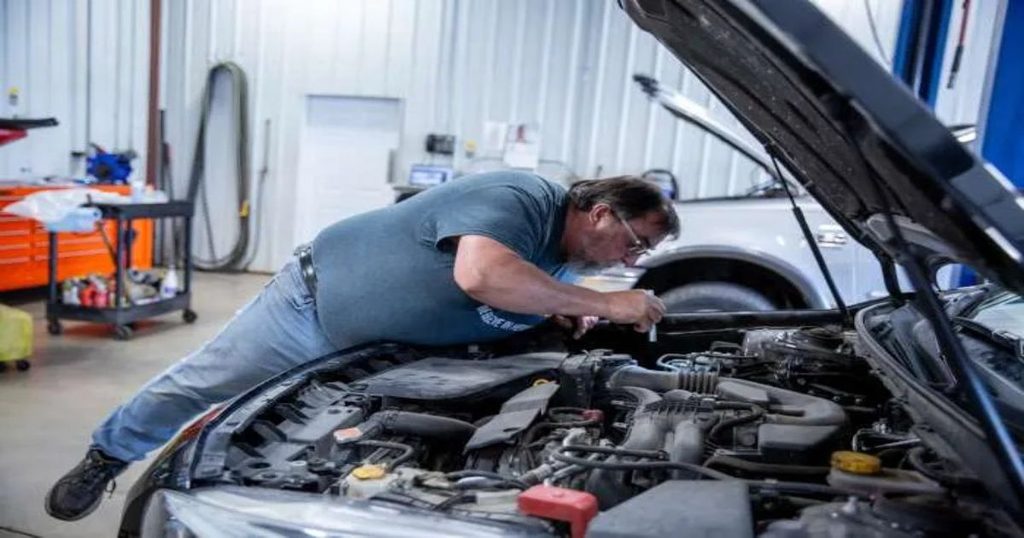
Your car makes a clicking sound, but does that mean you need a new starter? Not necessarily.
A weak electrical connection can create symptoms similar to those of a failing starter motor. That’s why an experienced technician looks beyond the obvious signs before identifying the problem.
An auto mechanic in Moorhead can investigate how your vehicle responds during a starting attempt, check whether the battery delivers sufficient power, and examine the electrical components responsible for turning the engine.
The findings help guide the next diagnostic steps, which may include:
Battery Performance Testing
A technician evaluates battery condition, state of charge, and available starting performance.
This helps determine whether the battery can support the electrical demands of engine cranking.
Electrical Connection Inspection
Technicians inspect battery cables, terminals, and ground connections for corrosion, damage, or excessive resistance.
They may use voltage-drop testing to identify connections that restrict current flow during starting.
Starter Circuit Testing
Electrical measurements help determine whether the starter receives the necessary power and control signals.
If the starter receives appropriate electrical input but cannot operate correctly, the technician can investigate the starter assembly and related mechanical conditions.
Identifying the Appropriate Repair
Testing helps determine whether the vehicle needs a starter replacement, electrical connection repair, or further diagnosis.
At Duggan’s Auto Service Center, our automotive services include charging and starting systems, electrical circuits, and vehicle diagnostics.
Our ASE-certified technicians work with domestic and imported vehicles, helping Moorhead drivers understand their automotive problems and available repair options.
Your Car Started Yesterday. Can You Trust It Tomorrow?
Intermittent starting problems can be particularly frustrating because they don’t always appear when you expect them.
Your vehicle might refuse to crank outside your home, then start normally several hours later.
A few days pass without trouble.
Then the same clicking sound returns.
Worn starter contacts, inconsistent electrical connections, or starting-control faults can contribute to this unpredictable behavior.
Temperature changes may also influence when the symptoms appear.
Instead of assuming the problem has disappeared, pay attention to patterns.
Record whether the trouble occurs during cold starts, after short trips, or following extended parking.
You can also note whether the dashboard lights dim or the engine makes unusual sounds.
These details give your technician useful information, especially when the vehicle starts normally during an inspection.
Why Moorhead Drivers Choose Duggan’s Auto Service Center?
When your vehicle refuses to start, you need more than someone who can replace parts.
You need technicians who can investigate the problem and explain what they find.
Duggan’s Auto Service Center has served the Moorhead community for more than 25 years.
As a NAPA Gold Certified AutoCare Center, we maintain professional automotive service standards and employ ASE-certified technicians.
Our team provides automotive diagnostics, charging and starting system services, electrical repairs, and preventive maintenance.
We also understand how important dependable transportation is for drivers throughout the Fargo-Moorhead area.
Whether you commute from Moorhead to Fargo, attend classes at MSUM, or travel regularly between Dilworth and nearby communities, unexpected starting problems can disrupt your day.
Our goal is to help you understand your vehicle’s condition and make informed repair decisions.
Battery Tests Fine, but Your Car Still Won’t Start? Let Duggan’s Help.
A battery that passes testing doesn’t rule out starter motor problems, faulty electrical connections, or other starting-system issues.
Understanding the cause helps you make informed decisions about your vehicle’s repair.
If your car repeatedly clicks, cranks slowly, or refuses to start, don’t wait for another inconvenient morning.
Duggan’s Auto Service Center provides professional automotive diagnostics and starting-system services in Moorhead, Minnesota.
When you need an auto mechanic in Moorhead, our team can help you investigate the problem and determine the appropriate next steps.
Visit us: 1405 Main Ave SE, Moorhead, MN 56560
Call: (218) 233-9169
Schedule an appointment with Duggan’s Auto Service Center and get answers about your vehicle’s starting problems.
Frequently Asked Questions About Car Starting Problems
1. Can my starter fail even when my battery tests good?
Yes. Your starter motor or its electrical circuit can malfunction even when the battery has sufficient charge and starting capacity. Professional testing can help identify which component prevents the engine from cranking.
2. Why does my car make one click but refuse to start?
A single click may indicate a starter solenoid or motor problem. However, damaged cables, poor ground connections, and insufficient electrical current can produce similar symptoms.
3. Can Minnesota’s freezing temperatures make starter problems worse?
Yes. Cold weather reduces available battery performance and increases engine cranking demands. These conditions can expose existing weaknesses in starter motors, electrical connections, and batteries.
4. Why does my car start sometimes but not others?
Intermittent starting problems may involve worn starter contacts, inconsistent electrical connections, faulty control circuits, or changing battery conditions. Tracking when the problem occurs can help technicians investigate.
5. Should I replace my starter if my battery passes a test?
Not without confirming the cause. A healthy battery doesn’t rule out faulty cables, relays, ground connections, or starting controls. Proper diagnosis helps determine whether starter replacement is necessary.